ItalianoEnglish
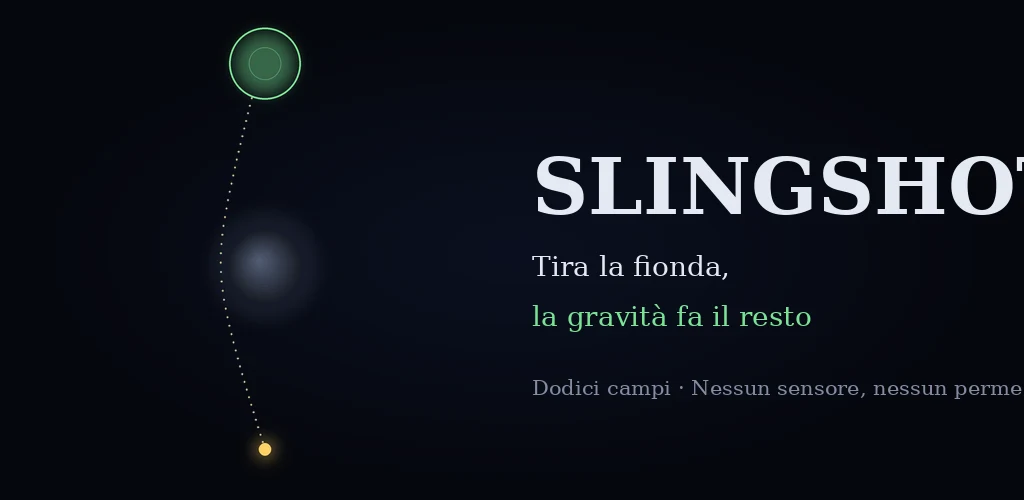
Pull the probe back, let it go, and the gravity of the planets does the rest of the work. While you aim, the predicted arc grows under your thumb — and it is the same maths as the real flight, not a shortcut that resembles it.
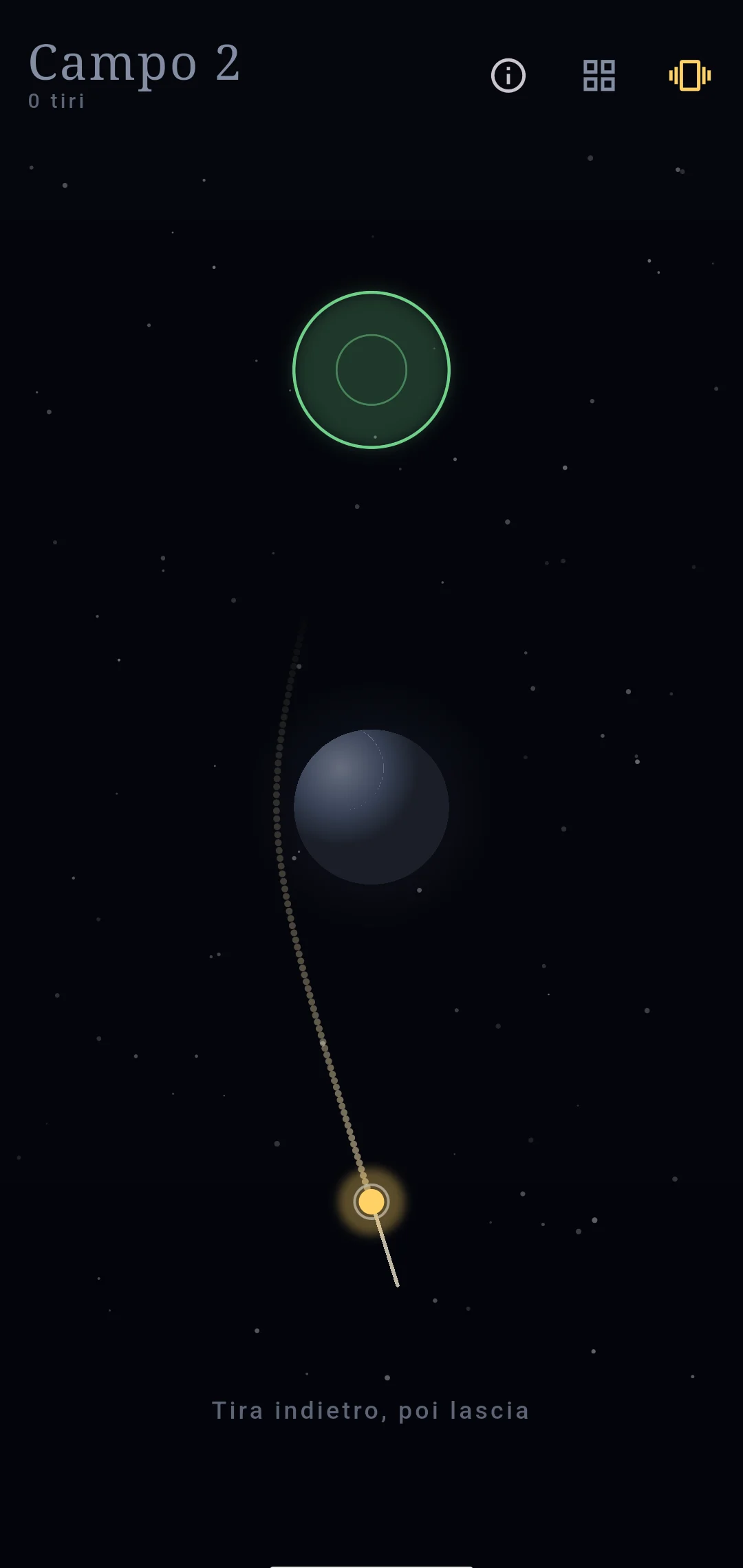
While you aim, the predicted arc curves around the planet. 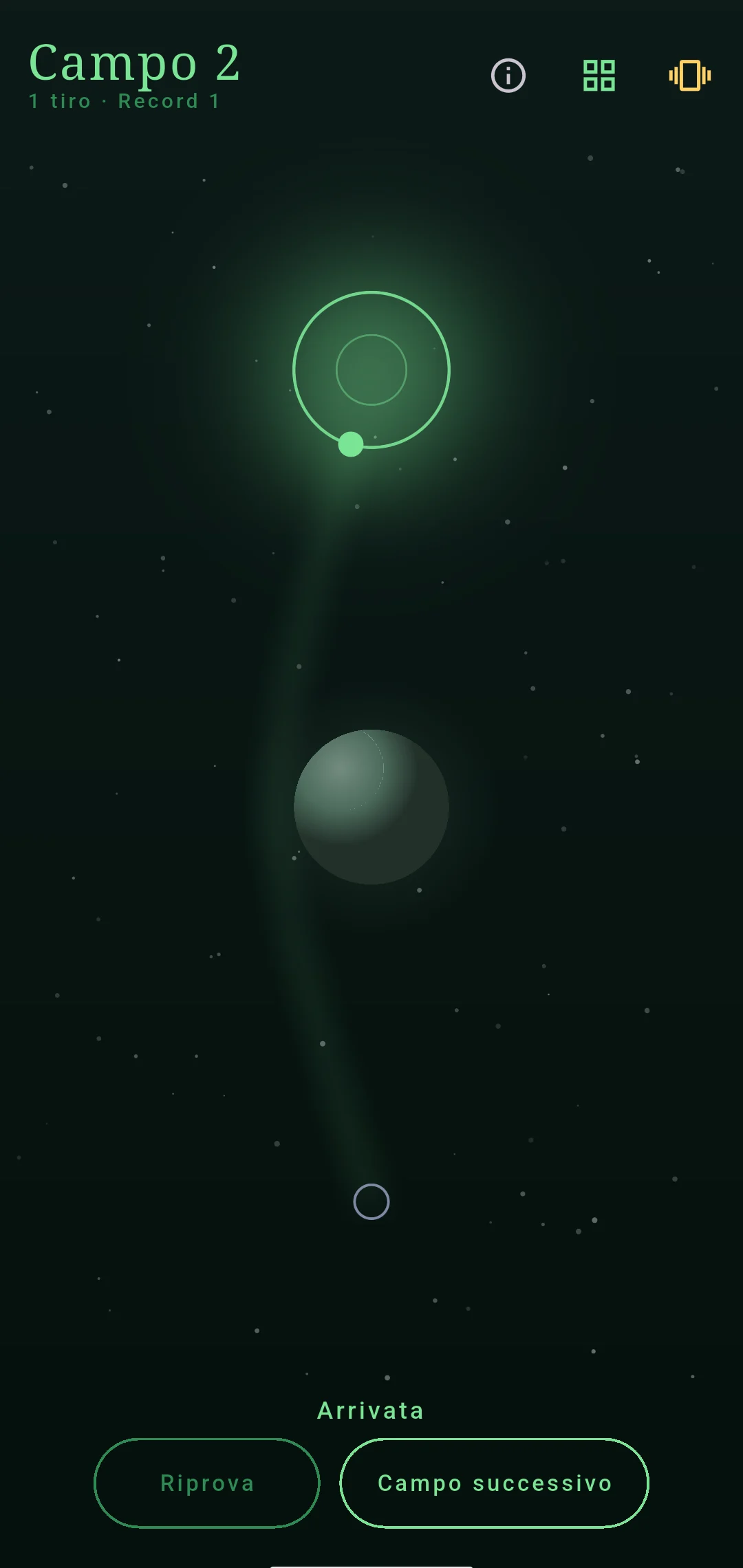
Arrived: the field warmed up as it closed in. 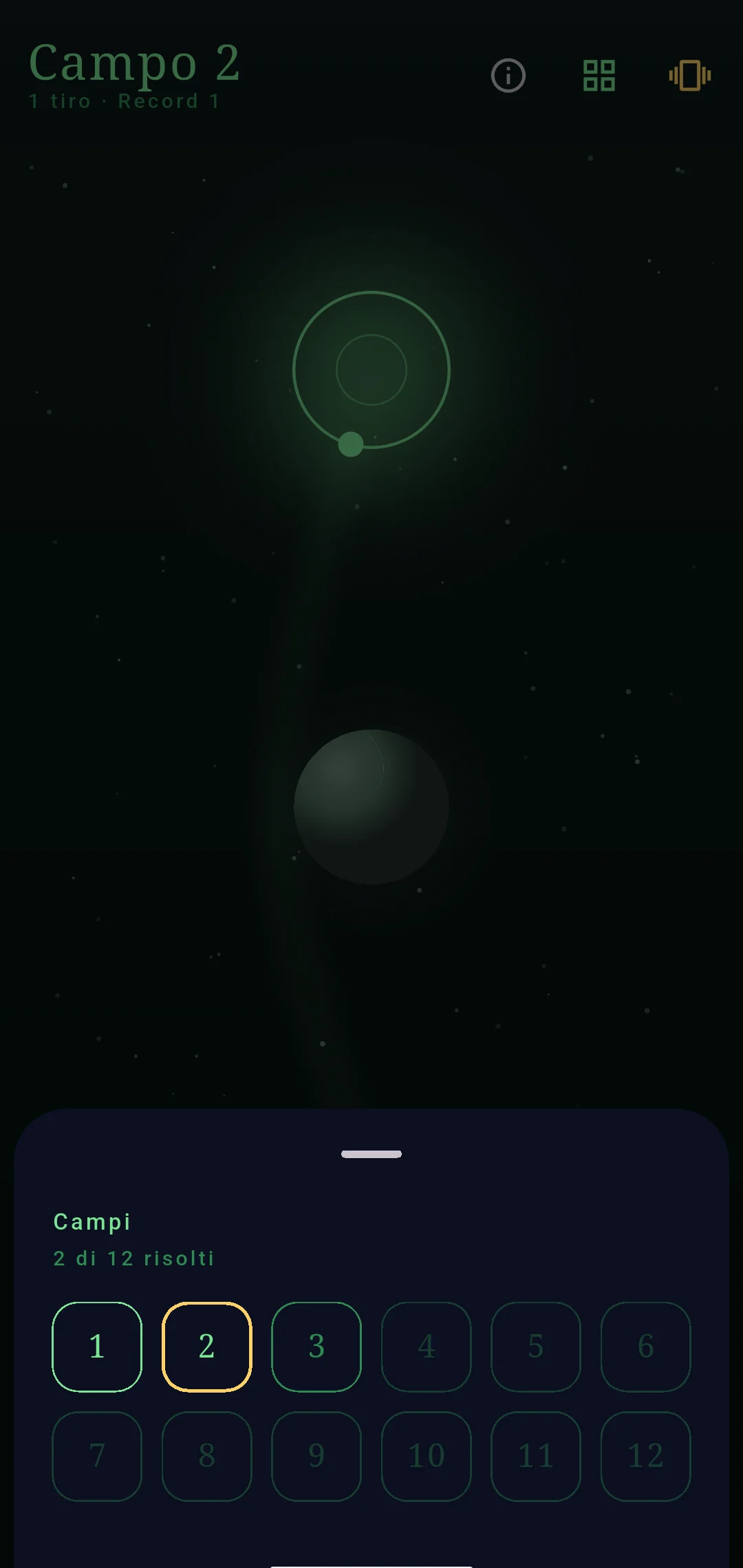
Twelve fields, opening one at a time.
What it does
- Twelve hand-drawn fields, in the order they teach: no gravity at all, then a planet to go around, then a planet to use.
- The dotted line is the flight, worked out with the same integrator: what you see while aiming is what happens when you let go.
- The field warms as the probe closes in, and stays lit with how close it got. Even a bad shot tells you how much was missing.
- A field opens once you have solved the one before it. How many shots it took you stays on the phone.
- In English and Italian, following the phone's language.
Every field is checked before it ships
A level that only works to the millimetre is not a level, it is a search. Before a field enters the game it is tried with every possible shot — and one solution existing is not enough: there has to be at least two and a half degrees of aim and four per cent of pull of room around it. Five fields were redrawn because they did not have it.
Your data stays yours
Slingshot asks for no permissions beyond the ad network and the vibrator: no sensors, no location, no camera. There is no account and no online leaderboard — that would be a server, and we do not have one. Solved fields stay on the phone.
How it is paid for
With a banner anchored at the bottom and, now and then, a full-screen ad once you have hit the target — never with the probe in flight. No subscription, no feature held hostage.