
ItalianoEnglish
Plafond tells someone on the Italian regime forfettario the two things they actually need: how far the €85,000 threshold is and how much is left to spend each month. The rest — tax returns, invoices, deadlines — is not its business.
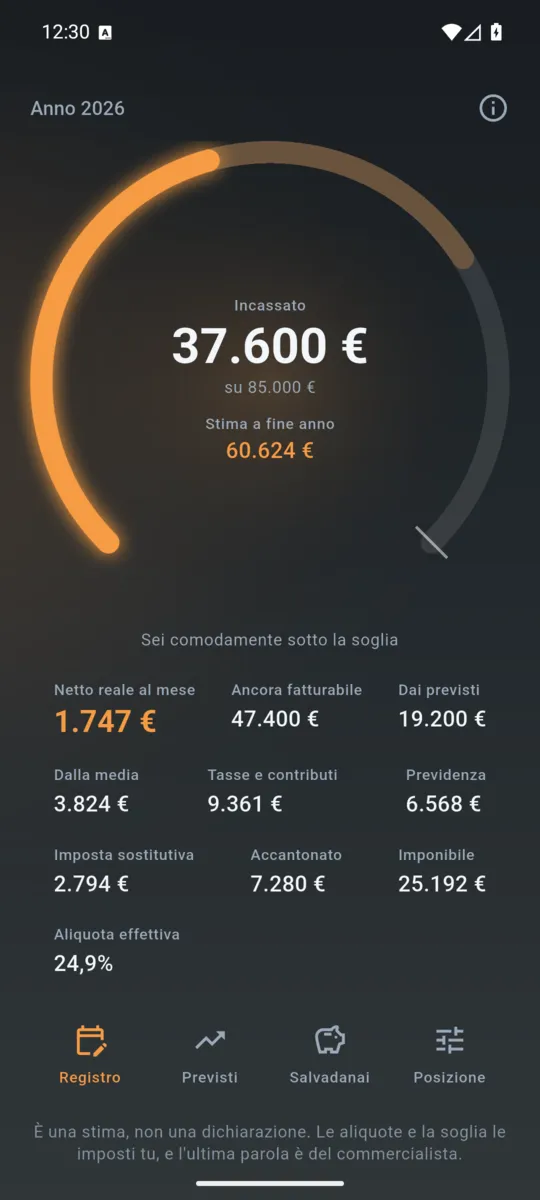
The solid arc is what you were paid. The faded one is where the year lands. 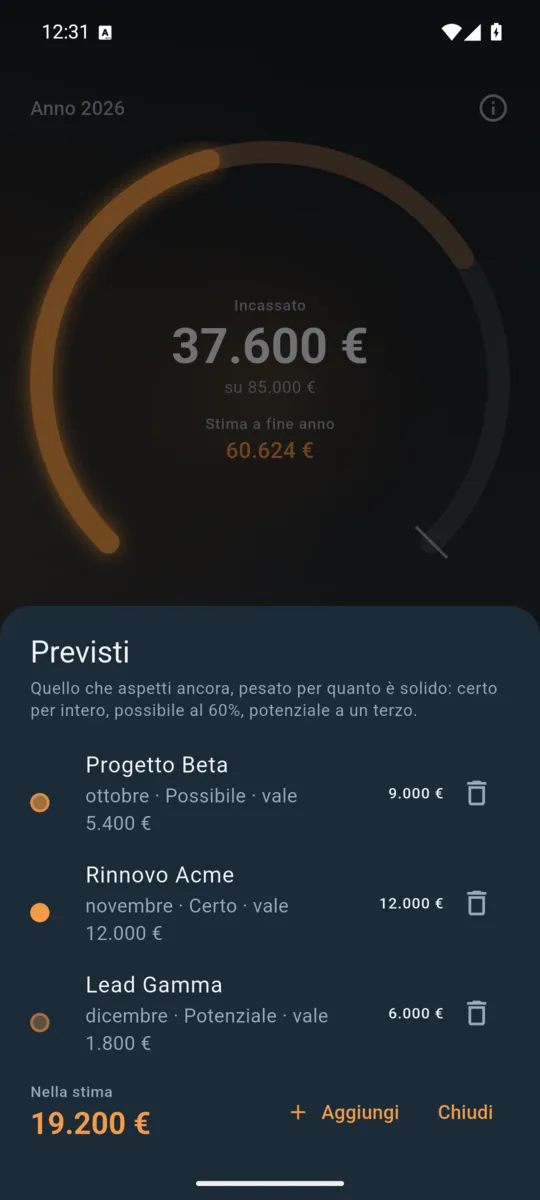
Expected income, weighted: certain, likely, possible. 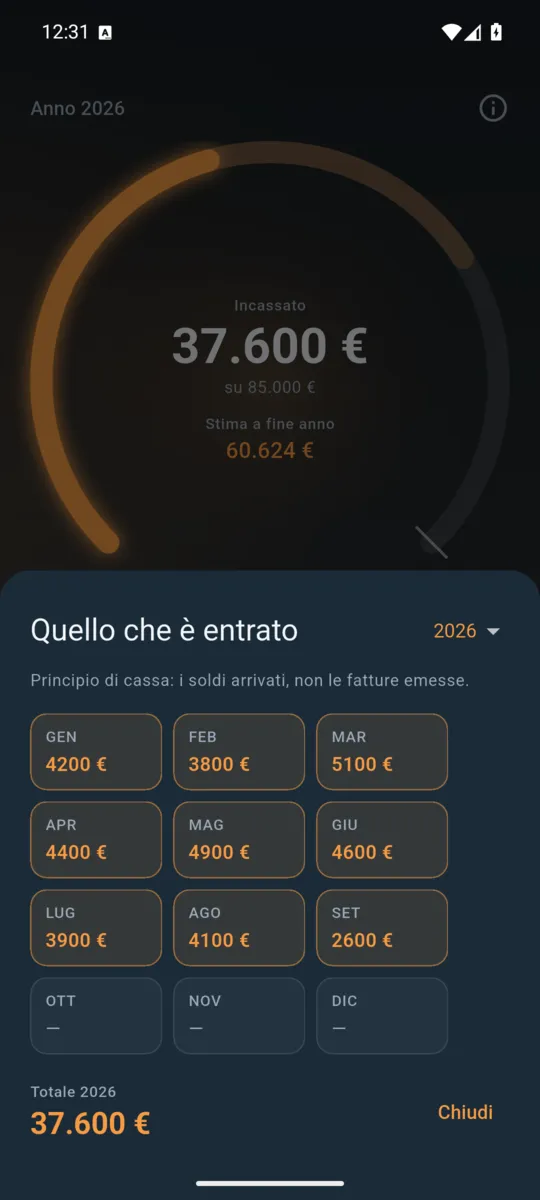
Twelve amounts, one per month: money received, not invoices issued. 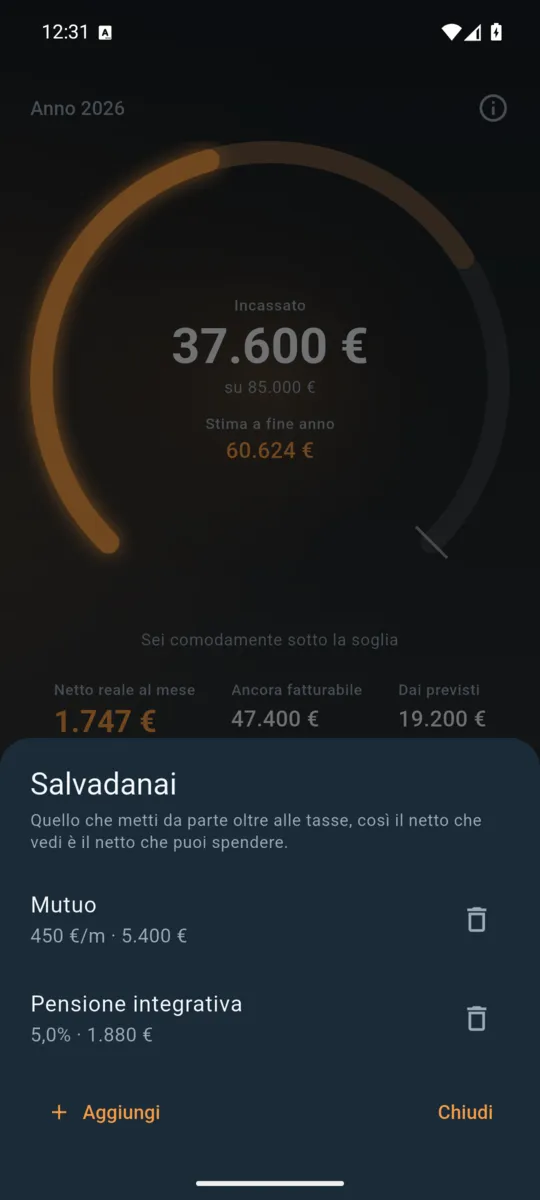
What you set aside comes off the net — that is the figure that counts.
The threshold, at a glance
The solid arc is what you have been paid. The faded one behind it is where the year lands if it carries on like this. Colour and thickness move with the estimate: a year that is tightening shows before you read a single figure.
The net you can spend
Not only the substitute tax and the contributions. Also what you set aside yourself — the mortgage, the private pension, the insurance — because the net that counts is what is left after the promises you have already made.
Expected income, weighted
Write down what you are expecting and how solid it is: certain, likely, possible. The estimate counts signed work in full, a likely one at 60% and a possible one at a third, and leaves the months it knows nothing about to your average. A wall of “maybe” does not move the dial the way a contract does.
The rates are yours
Profitability coefficient, substitute tax at 5% or 15%, the pension scheme, the fixed quota, the minimum, the 35% reduction — and even the threshold: they are settings with a starting value, not constants. The budget law moves them, and so can you.
What it does not do
No account. No sign-up. No server. No permissions: your figures stay where you wrote them, and the app works exactly the same on a plane. The ledger is cash-basis — twelve amounts, one per month, money received rather than invoices issued — because that is how the scheme is taxed.
And it is an estimate to steer by, not a tax return: the last word stays with your accountant.