
ItalianoEnglish
It opens and the Moon is already there, as it is right now: the lit part, the shadow crossing it, and the faint grey of the rest of the disc — the light the Earth throws back at it. One question, answered before you have finished asking it.
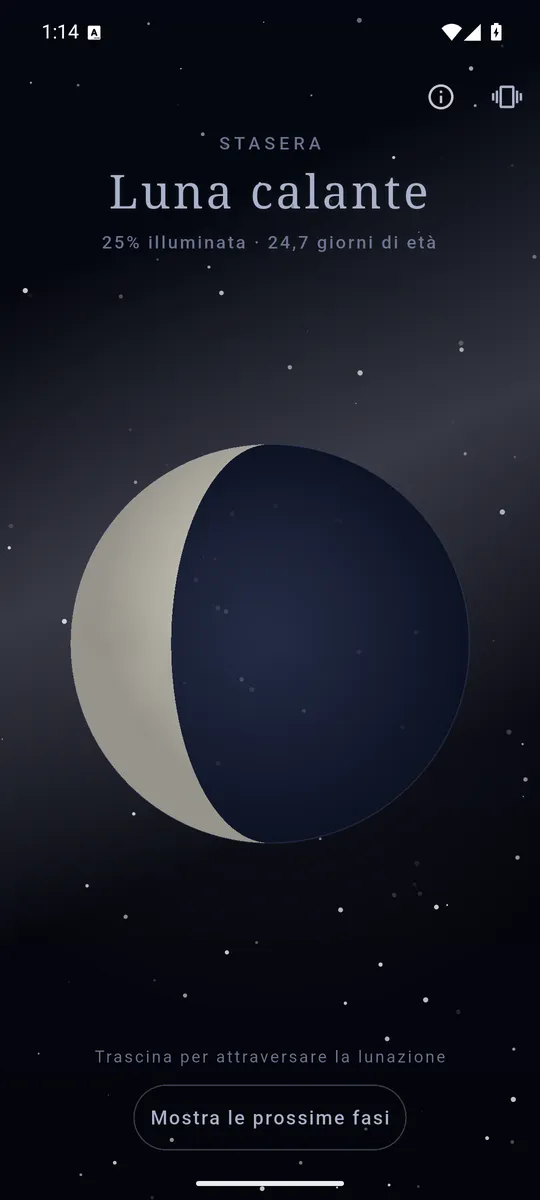
The phase right now, the illumination and the age: on opening. 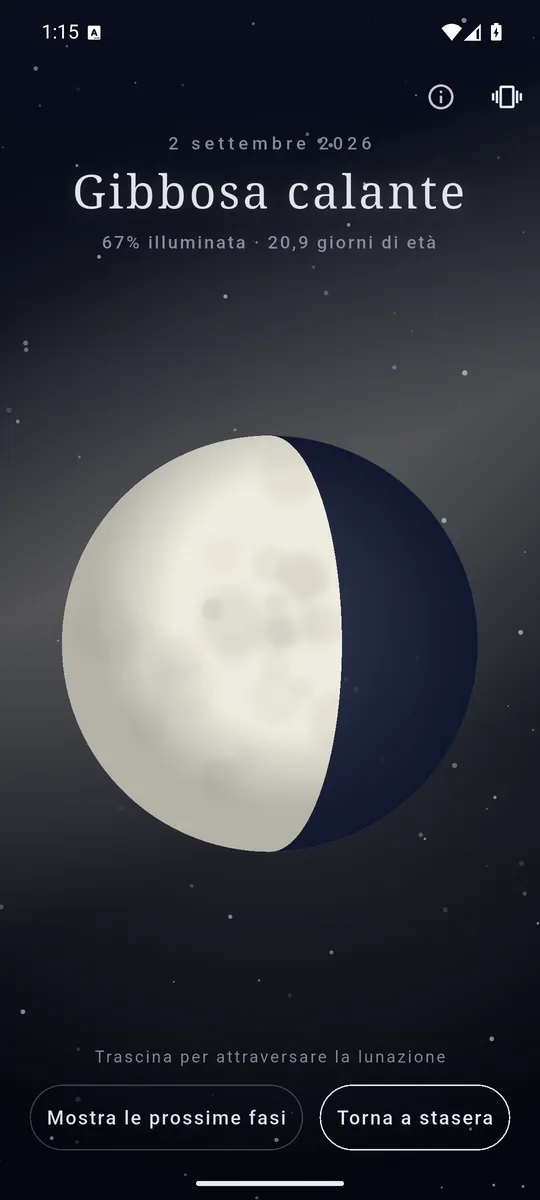
Drag, and the Moon crosses the month under your thumb. 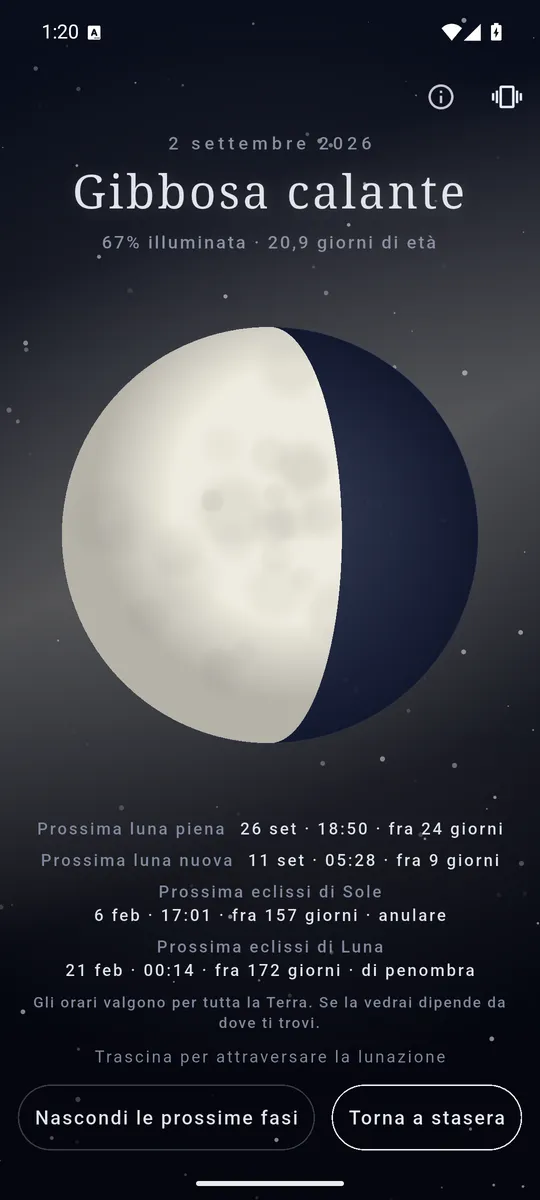
When full and new come round, and the next eclipses.
What it does
- The phase in words and in numbers. "Waning crescent · 24% lit · 22.3 days old": whoever is looking out of the window wants the name, whoever is photographing wants the number.
- The disc is drawn, not photographed. The terminator — the line between light and shadow — is the right curve, not half a circle: for all of the lunation bar two instants, that line is an ellipse.
- Full and new, with the countdown. Date, time and days to go.
- The next eclipses, with the kind spelled out — total, annular, partial or penumbral — and a note that the times are for the whole Earth and not for your balcony.
- Drag through the lunation. The Moon waxes and wanes under your thumb, with a tap of haptics at every phase you cross. Double tap to come back to tonight.
- In English and Italian, following the phone's language.
On the right minute, and off the network
The maths follows Jean Meeus's astronomical algorithms: the instants of new and full moon land on the right minute, and automated tests check it before every release. All of it happens on the phone — no location, no network, nothing to download — so Moon works up a mountain, on a plane and with mobile data off. Which is exactly where people look at the Moon.
Your data stays yours
There is nothing to send: no account, no sign-up, no server of ours, and not even your location. Two permissions — Internet, which the ads need, and vibration for the haptic feedback.
How it is paid for
A banner at the bottom, away from the controls, and an occasional full-screen ad only after you got your answer. No subscription, no feature held hostage.